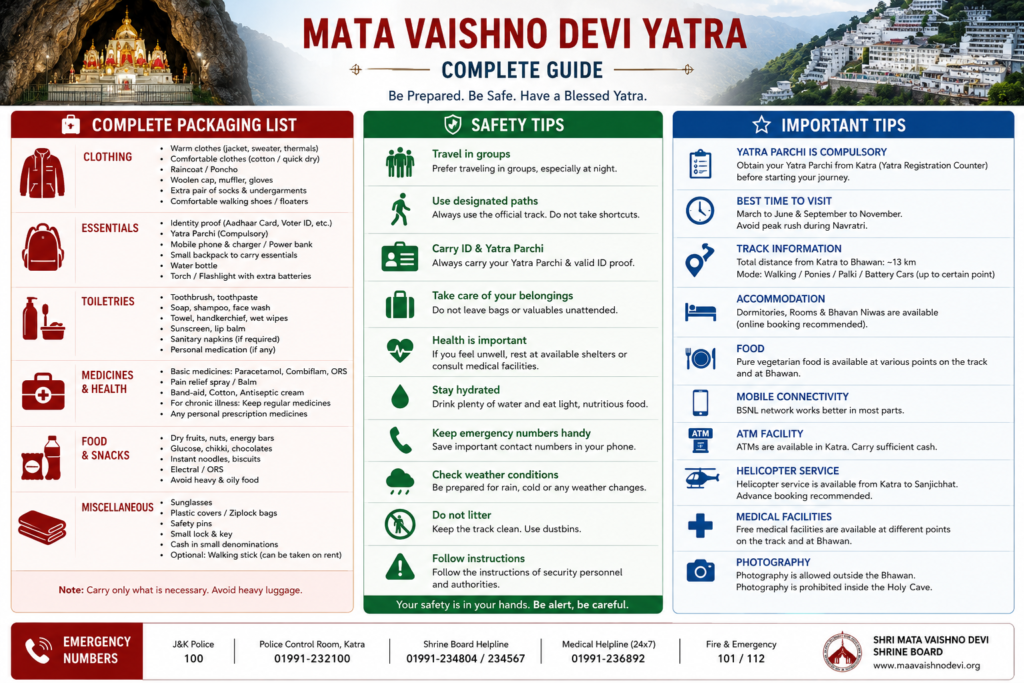
Weather & Packing List for Shri Mata Vaishno Devi
Embarking on the holy pilgrimage to the Shri Mata Vaishno Devi Shrine, nestled in the majestic Trikuta Mountains of Jammu and Kashmir, is a deeply profound and spiritually uplifting experience. Every year, millions of devotees traverse the 12 to 14-kilometer path from the base camp of Katra to the sacred Bhawan, chanting “Jai Mata Di” with unwavering faith.
While the spiritual calling remains the primary motivation for the journey, the physical reality of the trek demands careful planning. The weather in Katra and at the Bhawan changes dramatically throughout the year. Temperatures, rainfall, visibility, and even crowd patterns all shift considerably with the seasons. What you pack for a summer pilgrimage will be entirely useless during the freezing winter months, and the monsoon season presents its own unique set of logistical challenges.
It is also important to note that the weather at the higher altitudes near the Bhawan and Bhairon Ghati is typically 3°C to 6°C cooler than down in Katra town. To ensure your Yatra is comfortable, safe, and entirely focused on devotion, we have compiled this comprehensive, month-wise weather guide and ultimate packing list.
Shri Mata Vaishno Devi Month-Wise Weather Chart
Understanding the climatic conditions is the first step in planning a successful pilgrimage. Below is a detailed tabular breakdown of the average temperatures, expected rainfall, and general sun/weather conditions for every month of the year in the Katra and Vaishno Devi region.
| Month | Avg. Max / Min Temp (°C) | Approx. Rainfall (mm) | Sun Condition & General Weather |
| January | 11°C to 18°C / 1°C to 2°C | 105 mm | Moderate sun, sub-zero drops at night. Snow is possible at the Holy Cave. |
| February | 15°C to 20°C / 4°C | 79 mm | Cool and pleasant during the day. Snow can linger higher up. |
| March | 17°C to 25°C / 6°C to 8°C | 89 mm | Clear to partly cloudy. Pleasant days, cool nights. |
| April | 18°C to 28°C / 2°C to 10°C | 89 mm | Mostly sunny and mild. Favorable conditions for trekking. |
| May | 27°C to 34°C / 14°C to 16°C | 19 mm | Very sunny and warm. Days can get quite hot in Katra. |
| June | 31°C to 33°C / 18°C | 71 mm | Hot and sunny. Evenings provide cooler relief. |
| July | 25°C to 31°C / 18°C to 19°C | 293 mm | Cloudy with peak monsoon showers. High humidity. |
| August | 24°C to 31°C / 17°C to 19°C | 328 mm | Wettest period. Heavy showers, varying visibility, and high humidity. |
| September | 25°C to 30°C / 16°C to 17°C | 200 mm | Rain begins to ease. Occasional clouds but generally moderate. |
| October | 23°C to 28°C / 11°C to 12°C | 61 mm | Clear, mildly sunny days. Pleasant breeze and moderate humidity. |
| November | 17°C to 22°C / 5°C to 8°C | 20 mm | Excellent trekking weather. Cool, dry, and crisp. |
| December | 13°C to 18°C / 2°C to 3°C | 89 mm | Cold and clear days. Sub-zero temperatures possible at Bhawan with snowfall. |
Season-by-Season Weather Breakdown
1. Summer Season (March to June)
The spring and early summer months are widely considered an ideal time to visit, with temperatures ranging from a cool 15°C up to a warm 34°C. The days are beautifully sunny, allowing for clear views of the surrounding valleys. However, by May and June, the days in Katra become exceptionally hot, though the evenings bring much-needed cooler temperatures. The physical exertion of the climb combined with the summer sun means that hydration and sun protection are absolutely paramount during this window.
2. Monsoon Season (July to September)
The monsoon season drastically transforms the landscape of the Trikuta Hills into a lush, vibrant green paradise. However, it is also the most challenging time for the pilgrimage. The region experiences heavy to moderate rainfall, with August typically being the wettest period. Humidity is high, and the trekking paths can become muddy, slippery, and occasionally hazardous due to the risk of landslides. Helicopter services frequently face disruptions during these months due to poor visibility and dense cloud cover. Despite the challenges, the off-season offers budget-friendly stays and a much less crowded, serene experience for those willing to brave the elements.
3. Autumn and Winter Season (October to February)
October marks the beginning of the peak season, coinciding with major festivals like Navratri and Diwali. The autumn months of October and November provide picture-perfect, pleasant weather with daytime highs around 25°C to 28°C. As December approaches, the region transitions into deep winter. Temperatures can plummet to sub-zero levels (-1°C to 0°C) at the higher reaches, and occasional snowfall blankets the Bhawan and Bhairon Ghati. Winter trekking requires excellent physical fitness as the cold air and tricky terrain demand more stamina.
The Ultimate Packing List for Shri Mata Vaishno Devi
Packing smartly for the Yatra is the secret to a comfortable journey. Overpacking will weigh you down (even if you hire a porter), while underpacking leaves you vulnerable to the harsh mountain elements. Your packing list should be strictly dictated by the month of your travel.
1. Clothing Essentials: Layering is Key
No matter what time of year you visit, layering is the most effective clothing strategy. As you climb from Katra to the Bhawan, your body temperature will fluctuate drastically due to the physical exertion and the changing altitude.
- Summer (March to June): Pack lightweight, breathable cotton t-shirts and comfortable trekking pants. Avoid heavy denim. Even in peak summer, it is highly recommended to pack a light sweater or a windbreaker, as the open sections of the higher track and the Bhawan area can get breezy and cool at night.
- Monsoon (July to September): Synthetic, quick-dry clothing is a must. Cotton absorbs moisture and takes hours to dry in high humidity. Bring a high-quality, heavy-duty poncho or a fully waterproof rain jacket. Pack extra pairs of dry undergarments in sealed plastic bags.
- Winter (October to February): Thermal innerwear is non-negotiable. Over your thermals, wear a fleece sweater, topped with a heavily insulated, windproof down jacket. Bring a warm woolen beanie that covers your ears, heavy winter gloves, and a woolen scarf to protect your neck from the biting wind.
2. Footwear: Your Most Important Gear
You will be walking anywhere from 24 to 28 kilometers round trip on paved but steeply inclined paths.
- Trekking Shoes: Invest in a good pair of lightweight trekking shoes with excellent grip and ankle support. The path can be tough on the knees and ankles.
- Avoid New Shoes: Never attempt the Yatra in brand-new shoes. Break them in for at least a few weeks before your trip to avoid debilitating blisters.
- Socks: Pack multiple pairs of high-quality, seamless socks. For winter, wool socks are essential. During the monsoon, carry at least three spare pairs of dry socks, as walking in wet socks will ruin your feet.
3. Yatra Gear and Accessories
- Backpack: A lightweight, ergonomic daypack with padded shoulder straps to carry your essentials.
- Walking Stick: A sturdy walking stick (available for purchase or rent at the Katra base) takes a significant amount of pressure off your knees during both the ascent and the steep descent.
- Hydration: A reusable water bottle. Electrolyte tablets or ORS packets are highly recommended, especially during the summer, to replenish salts lost through heavy sweating.
- Sun Protection: For the summer months, a wide-brimmed cap, UV-protection sunglasses, and a good SPF sunscreen are crucial to prevent sunburn at higher altitudes.
- Rain Protection: Aside from a poncho, carry a waterproof pouch to secure your phone, cash, and essential Yatra slips (RFID cards) during the monsoon.
4. Medical and First-Aid Kit
While there are excellent medical dispensaries managed by the Shrine Board along the route, carrying a personal medical kit saves time and hassle.
- Pain Relief: Muscle relaxant sprays or ointments (like Volini or Moov) for aching calves and knees.
- Medications: Basic painkillers (Paracetamol/Ibuprofen), antacids for indigestion, and anti-nausea pills (especially if you plan to travel by helicopter).
- Bandages: A generous supply of blister plasters or band-aids.
- Personal Meds: Any daily prescription medications you require, packed in sufficient quantities.
Special Travel Tips Based on Weather and Crowds
- Pacing Yourself: The altitude gain and steep gradients can easily tire out your knees and lungs. Track your pace, take frequent short breaks at the sheltered viewpoints, and do not rush the climb.
- Night Trekking: Many fit pilgrims prefer trekking at night, particularly during the hot summer months. It offers much cooler temperatures and a beautifully serene, illuminated ambiance. If trekking at night, carrying a headlamp or a small flashlight is helpful.
- Family Travel: If you are traveling with infants, use ergonomic baby carriers, as standard strollers are entirely impractical on the steep inclines. For senior citizens, strongly consider booking the helicopter to Sanjichhat or utilizing the palki (palanquin) and battery car services to avoid weather-related physical strain.
- Festive Rush: If you plan to visit during Chaitra Navratri (Spring) or Sharad Navratri (Autumn), be prepared for massive crowds and peak footfall. Ensure that all your accommodations, helicopter tickets, and VIP Darshan passes are pre-booked months in advance.
Conclusion
The journey to the holy cave of Mata Vaishno Devi is an incredible test of devotion, physical endurance, and mental fortitude. By understanding the monthly weather patterns—from the freezing, snow-covered paths of January to the heavy monsoon downpours of August and the balmy, pleasant breezes of October—you can adequately prepare yourself for the elements.
Equipping yourself with the right clothing layers, sturdy footwear, and essential gear ensures that physical discomfort never distracts you from your spiritual goal. No matter when you choose to answer the Divine Mother’s call, stepping onto the mountain path fully prepared allows you to focus entirely on the beautiful, transformative experience of the Yatra. May your journey be safe, comfortable, and deeply blessed!
Author Profile

- The Bijli Engineer is an education and career content writer contributing to JammuKashmirInfo.com, with a focus on Jammu & Kashmir education, government jobs, competitive examinations, and student guidance.
Latest entries
 BlogSeptember 1, 2026JKSSB Class IV Recruitment 2026 Notification Out, Apply Online For 2863 Vacancies
- BlogAugust 21, 2026lesson
 BlogAugust 17, 2026JK STUDY BUDDY CLASS 7 WEEKLY QUIZ SUBJECT SST
- BlogAugust 17, 2026JK STUDY BUDDY CLASS 7 WEEKLY QUIZ SUBJECT MATH