JammuKashmirInfo

SMVD

SHRI MATA VAISHNO DEVI JI
Blog, SMVD

SHRI MATA VAISHNO DEVI JI

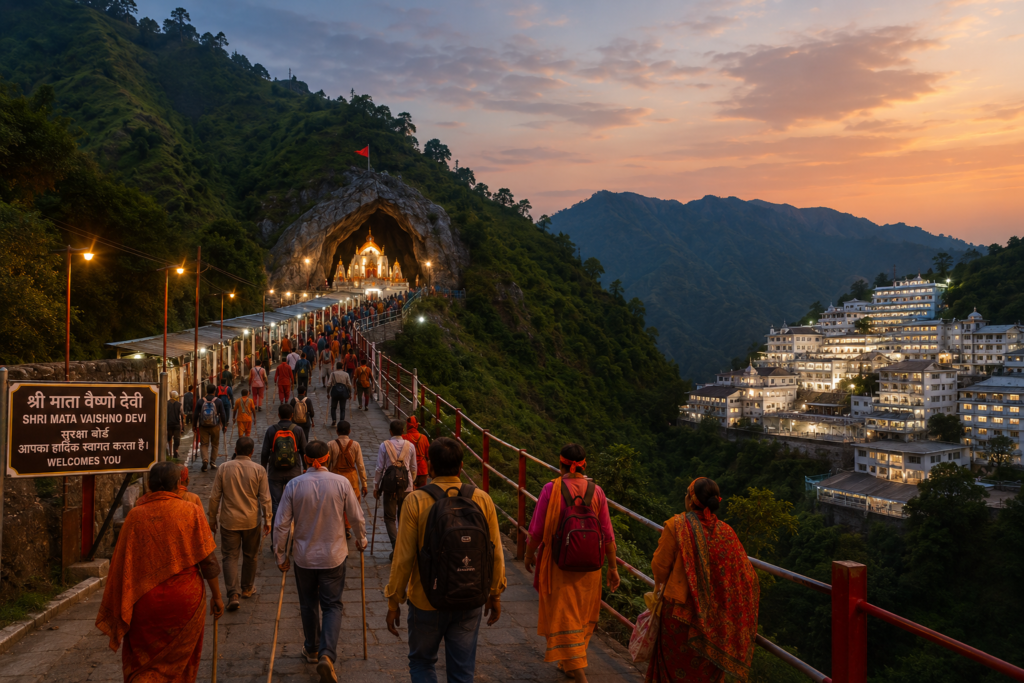
The Divine Call of the Mountains: A Journey to Shri Mata Vaishno Devi Ji High in the rugged, misty peaks of the Trikuta Mountains in Jammu and Kashmir lies one of the most revered and spiritually magnetic shrines in the world: the holy cave of Shri Mata Vaishno Devi Ji. Nestled at an altitude of approximately 5,200 feet, this sacred destination draws millions of devotees every year, making it one of the most visited pilgrimage centers in India. The journey begins at the bustling base camp town of Katra, from where pilgrims embark on a challenging yet deeply fulfilling 12-kilometer trek to the Bhawan. But the pilgrimage to Vaishno Devi is not merely a physical journey; it is a profound spiritual expedition. It is widely believed that no one can visit the holy shrine unless they are specifically “called” by the Mother Goddess herself—a phenomenon lovingly referred to by devotees as Ma ka Bulawa. Whether a person is wealthy or destitute, near or far, they will only find themselves at the threshold of the holy cave when the Divine Mother wills it. This post explores the rich history, the profound spiritual significance, and the mystical manifestations of the Goddess in the form of the three sacred Pindies that reside within the ancient cave. The Epic History and Legend of the Mother Goddess According to ancient Hindu mythology, Mata Vaishno Devi was created by the combined spiritual energies (Tejas) of the three supreme Goddesses—Maha Kali, Maha Lakshmi, and Maha Saraswati. The primary purpose of her incarnation was to uphold righteousness (Dharma) and destroy evil forces on Earth. Born as a beautiful princess named Vaishnavi in the household of Ratnakar Sagar, she exhibited deep spiritual inclinations from a very young age. She ultimately renounced worldly life, retreating into the dense forests of the Trikuta Hills to perform intense penance (Tapasya) and meditate upon Lord Vishnu. The most popular and defining legend associated with the shrine involves a humble, devoted village priest named Pandit Sridhar and a mystic named Bhairon Nath. Sridhar, despite living in extreme poverty, was instructed by the Goddess in a divine dream to host a massive community feast (Bhandara). Miraculously, the Goddess appeared in his home as a young girl, helping Sridhar feed the massive multitudes from a single, mysteriously inexhaustible small vessel. Among the attendees of this feast was Bhairon Nath, a powerful but arrogant Tantric. He recognized the young girl’s divine nature but sought to capture her to attain her supreme cosmic powers for himself. Fleeing from Bhairon Nath’s aggressive pursuit, Vaishnavi retreated further into the mountains. During her flight, she paused at various spots that are now significant pilgrimage markers: Eventually, she reached the main holy cave at Bhawan. When Bhairon Nath cornered her there, she assumed the terrifying, omnipotent form of Maha Kali and severed his head, which flew to a distant hilltop. Realizing his folly in his dying moments, Bhairon Nath pleaded for forgiveness. The compassionate Mother granted him a boon: every pilgrim’s journey to her shrine would only be considered complete after visiting the Bhairon temple. Following this epic confrontation, Mata Vaishnavi shed her human form and immersed her divine presence into a massive rock inside the cave, manifesting as the holy Pindies. The Spiritual Significance of the Yatra The pilgrimage to Mata Vaishno Devi is a powerful metaphor for the human soul’s journey toward divine realization. The arduous 12-kilometer climb tests the physical endurance and mental fortitude of the devotees, demanding a complete surrender of the ego. As pilgrims chant “Jai Mata Di” (Victory to the Mother Goddess) in unison echoing through the valleys, a profound sense of equality permeates the atmosphere. Differences of caste, creed, wealth, and social status dissolve entirely on the mountain paths; everyone is simply a child of the Mother, seeking her boundless grace. The Goddess is worshipped as the ultimate symbol of Shakti (cosmic feminine energy). She is the nurturing mother who protects her children, the fierce warrior who annihilates ignorance and evil, and the bestower of wealth, wisdom, and spiritual liberation. Devotees visit the shrine with various intentions—some seek material blessings, others pray for health and familial harmony, while many simply come to express gratitude for answered prayers. The profound peace experienced upon reaching the sanctum sanctorum, after hours of grueling walking, is often described by pilgrims as an indescribable spiritual ecstasy. It is a place where faith transcends logic, and the heart connects directly with the divine frequency of the universe. The pain of the physical climb is entirely washed away by the spiritual relief of arriving at the Mother’s doorstep. The Sanctum Sanctorum: Decoding the Three Pindies The absolute climax of the pilgrimage is the entry into the ancient Holy Cave. Unlike most traditional Hindu temples, the sanctum of Shri Mata Vaishno Devi does not house man-made idols, statues, or sculpted images of the Goddess. Instead, the Divine Mother reveals herself in a completely natural, Swayambhu (self-manifested) form—as three rock heads protruding from the base of the holy cave. These natural rock formations are known as the Pindies. Though they stem from the same single rock base, they possess distinct colors and textures. The three Pindies are seated together, representing the ultimate trinity of the supreme feminine power, embodying the three Gunas (fundamental qualities) of the universe. 1. Maha Kali (The Right Pindi) Positioned on the right side of the devotee as they look at the sanctum, the first Pindi represents Goddess Maha Kali. 2. Maha Lakshmi (The Center Pindi) In the middle sits the largest and most prominent of the three, the Pindi of Goddess Maha Lakshmi. 3. Maha Saraswati (The Left Pindi) On the far left side of the devotee lies the Pindi of Goddess Maha Saraswati. Together, these three Pindies symbolize the holistic nature of the entire cosmos—creation, preservation, and dissolution. They serve as a powerful reminder to devotees that true balance and happiness in life are achieved only when purity and wisdom (Saraswati), passionate action and prosperity (Lakshmi), and

Blog, SMVD

Online Yatra Registration for Shri Mata Vaishno Devi

Online Yatra Registration for Shri Mata Vaishno Devi The pilgrimage to the holy shrine of Shri Mata Vaishno Devi is an extraordinary journey of faith, endurance, and spiritual awakening. Nestled in the pristine peaks of the Trikuta Mountains in Jammu and Kashmir, the holy cave attracts millions of devotees annually. A popular saying among pilgrims is “Ma ka Bulawa”—the belief that one only embarks on this journey when the Divine Mother herself calls them. While the spiritual essence of the Yatra remains ancient and unchanged, the logistics of the pilgrimage have dramatically modernized. Gone are the days when devotees had to stand in grueling, mile-long queues at the Katra base camp just to secure a basic entry slip. Today, the Shri Mata Vaishno Devi Shrine Board (SMVDSB) has completely overhauled the system, creating a highly efficient digital infrastructure. The Evolution of the Yatra Parchi: From Paper to RFID To understand the current system, it helps to know how it evolved. Historically, every pilgrim was required to obtain a physical “Yatra Parchi” (Pilgrimage Slip) from the counters in Katra before crossing the Ban Ganga checkpost. This slip acted as a crowd-control measure and an insurance document. However, managing 30,000 to 40,000 pilgrims a day manually led to massive bottlenecks. The SMVDSB introduced online registration to alleviate this stress, allowing pilgrims to print their slips at home. Recently, the Board took a massive leap forward for pilgrim safety and security by introducing the Radio Frequency Identification (RFID) system. Today, the online registration process does not give you the final access ticket; rather, it gives you a digital confirmation. You must present this confirmation at specific kiosks in Katra to receive a physical RFID card, which you must wear around your neck for the entire duration of the trek. This card tracks your movement, prevents overcrowding in the Bhawan area, and acts as a vital safety lifeline in case of emergencies or missing persons. Why Register Online? The Core Benefits While offline counters still exist for spontaneous travelers, registering online in advance is highly recommended for several critical reasons: Step-by-Step Guide to Online Yatra Registration The official and only authorized website for all Shri Mata Vaishno Devi bookings is www.maavaishnodevi.org. Beware of fraudulent websites or third-party agents claiming to offer VIP access or expedited registration for an extra fee. Registration for the Yatra is entirely free of cost. Here is the step-by-step process to secure your digital Yatra slip: Step 1: Accessing the Official Portal Open your web browser and navigate to the official SMVDSB website (www.maavaishnodevi.org). Alternatively, you can download the official “Mata Vaishno Devi App” from the Google Play Store or Apple App Store. The interface is clean, secure, and user-friendly. Step 2: Creating a Devotee Profile (New User Registration) If you are a first-time user, you must create a master account. Step 3: Logging In Return to the login page and enter your newly created username (usually your registered mobile number or email ID) and password. Enter the CAPTCHA code and click “Login.” Step 4: Navigating to Yatra Registration Once logged into your dashboard, you will see a grid of services (Helicopter, Room Booking, SSVP, etc.). Click on the icon labeled “Yatra Parchi” or “Yatra Registration”. Step 5: Selecting the Date and Adding Pilgrims Step 6: Final Review and Generation Review all the names and ID numbers carefully. A typo here can cause significant issues at the verification counter. Once verified, click “Generate Yatra Parchi.” Step 7: Print and Save The system will generate a digital document (PDF) containing a barcode/QR code and the details of all registered pilgrims. Download this PDF. While digital copies on your phone are accepted, it is highly recommended to carry at least one clear, physical printout. Phone batteries die quickly in the cold mountain air, and network connectivity can be spotty in certain areas of Katra. The Crucial Next Step: Exchanging Your Printout for an RFID Card Your online printout is only half the battle. You cannot begin the trek with just the paper printout. It must be exchanged for an RFID card. When you arrive in Katra, locate an official RFID counter. The Shrine Board has set up numerous distribution centers to ensure the process takes only a few minutes for pre-registered users. Major RFID Collection Points in Katra: The Process: Returning the Card: The RFID card is the property of the Shrine Board. After you complete your Darshan, descend the mountain, and exit the Shrine area, you are strictly required to drop the RFID card into the designated collection bins at the exit gates. Failing to return the card disrupts the Shrine Board’s tracking matrix. Integrating Other Online Services One of the greatest advantages of registering online is that your login profile becomes a centralized hub for your entire pilgrimage. Once your profile is active, you can seamlessly book supplementary services using the same dashboard. Essential Yatra Registration Guidelines To ensure your journey is free of bureaucratic hurdles, please adhere to the following rules established by the Shrine Board. Rule / Guideline Detailed Information Official Website Exclusivity www.maavaishnodevi.org is the only official platform. Never pay for a basic Yatra Registration; it is 100% free. Advance Booking Window The online system allows you to generate a Yatra Parchi up to 60 days prior to your intended date of travel. ID Proof Mandatory You must carry the original identity card that you used during the online registration process. Photocopies are generally not accepted at the RFID counter. Time Validity Your Yatra Parchi/RFID card is valid only for the specific date you selected. You must cross the first checkpost (Ban Ganga or Tarakote) on that exact date. Children’s Registration Children below the age of 3 years generally do not require a separate Yatra Parchi, but it is always best practice to add them to the adult’s registration form for tracking purposes. Strictly Non-Transferable You cannot give your Yatra Parchi or RFID card to another person. Biometric checks and camera surveillance are active across the

Blog, SMVD

Route to Holy cave

Shri Mata Vaishno Devi Yatra Routes Embarking on the pilgrimage to the holy shrine of Shri Mata Vaishno Devi is an experience that blends intense physical exertion with profound spiritual awakening. Nestled in the folds of the majestic Trikuta Mountains in Jammu and Kashmir, the holy cave draws millions of devotees each year. As an AI, I cannot experience the physical weariness or the spiritual ecstasy of this climb, but I can provide you with a meticulously detailed, factual, and comprehensive guide to navigating these sacred paths. The journey from the base camp at Katra to the Bhawan (the Holy Cave) and subsequently to the Bhairav Nath Mandir is not a single, uniform road. Over the decades, the Shri Mata Vaishno Devi Shrine Board (SMVDSB) has developed multiple tracks to ease the journey, manage the millions of pilgrims, and accommodate the elderly and differently-abled. Understanding these routes, the distances, and the spiritual significance of the stops along the way is crucial for a fulfilling Yatra. This guide will break down the anatomy of the trek, compare the various routes in a detailed table, and explore the deep mythological importance of every major milestone on the way to the Divine Mother. Understanding the Yatra Geography The pilgrimage traditionally begins at Katra, situated at an altitude of roughly 2,500 feet, and climbs to the Bhawan at approximately 5,200 feet. The highest point on the traditional trekking route is Sanjichhat, perched at about 6,200 feet, before the path descends slightly to the main shrine. Finally, the journey requires one last steep ascent to the Bhairav Nath Temple at 6,600 feet. The total distance from Katra to the Bhawan varies between 12 kilometers to 14 kilometers, depending entirely on the specific route you choose. The paths are entirely paved, well-lit throughout the night, and covered with rain shelters over large sections. To help you plan your ascent, here is a comprehensive comparison of the different routes available for the Yatra. Pilgrims often combine different segments (e.g., taking the New Tarakote Marg to Adhkuwari, and then the Himkoti Route to the Bhawan). The Spiritual Milestones: Importance of Places on the Route The traditional old route is not just a physical path; it is the exact historical trail that Mata Vaishnavi took when fleeing from the arrogant Tantric, Bhairon Nath. Every major stop on this route commemorates a specific event from that epic chase, making the trek a journey through living mythology. Route Segment / Name Starting Point Ending Point Approx. Distance Ideal Mode of Travel Key Characteristics & Features Traditional Old Route Katra (Darshani Deodi) Adhkuwari 6.0 km Walking, Ponies, Palkis Steeper inclines, heavy pony traffic, highly crowded, passes through ancient spiritual milestones (Ban Ganga, Charan Paduka). New Tarakote Marg Katra (Tarakote) Adhkuwari 7.5 km Strictly Pedestrians Gentle gradient, wider track, zero pony/mule traffic, exceptionally clean, scenic valley views, modern amenities and eateries. Traditional Upper Track Adhkuwari Bhawan (via Sanjichhat) 6.0 km Walking, Ponies, Palkis Steep climb up to Sanjichhat, followed by a descent to Bhawan. Traditional route, scenic but physically demanding. Himkoti Route (Battery Car Track) Adhkuwari Bhawan (via Himkoti) 5.5 km Battery Cars, Wheelchairs, Walking Very gentle gradient, zero ponies allowed, highly recommended for elderly, physically challenged, and families with strollers. Bhairon Ghati Climb Bhawan Bhairav Nath Mandir 1.5 km Walking, Ponies Extremely steep, vertical climb. Physically taxing after the long main trek. Bhairon Passenger Ropeway Bhawan Bhairav Nath Mandir 300 meters (Aerial) Cable Car Takes only 5 minutes. Bypasses the steep climb entirely. Highly affordable and accessible for everyone. 1. Ban Ganga (Approx. 1.5 km from Katra) As you begin your trek from the Darshani Deodi checkpost, the first major spiritual milestone you encounter is the Ban Ganga river. 2. Charan Paduka (Approx. 3 km from Katra) Located a short, steep climb away from Ban Ganga is a small but profoundly significant temple known as Charan Paduka. 3. Adhkuwari / Garbh Joon Cave (Approx. 6 km from Katra) Adhkuwari represents the halfway mark of the pilgrimage and is one of the most important spiritual junctions of the entire Yatra. 4. Sanjichhat (Approx. 9.5 km from Katra / 3.5 km from Adhkuwari) If you take the traditional upper track from Adhkuwari, your next major stop is Sanjichhat. 5. The Holy Cave – Bhawan (Approx. 12-13 km from Katra) The ultimate destination of the pilgrimage is the sanctum sanctorum, simply known as the Bhawan. The New Age Paths: Tarakote Marg and Himkoti Route Recognizing the immense physical toll of the traditional route and the hazards of mixing pedestrian traffic with thousands of ponies, the Shrine Board developed alternative routes that focus on safety, cleanliness, and accessibility. Tarakote Marg (Katra to Adhkuwari): Inaugurated in recent years, the Tarakote Marg is a 7.5-kilometer alternative to the traditional Ban Ganga route. It is strictly pedestrian-only; no ponies or mules are allowed. The gradient is significantly gentler, making the climb far less strenuous on the knees and lungs. The path is covered with colorful anti-skid tiles, features ambient lighting, free medical units, and beautiful landscaped viewpoints. While you bypass Ban Ganga and Charan Paduka, you gain an incredibly peaceful, quiet, and physically easier ascent. Himkoti Route (Adhkuwari to Bhawan): Instead of taking the steep climb to Sanjichhat, pilgrims can opt for the Himkoti route. This 5.5-kilometer track is a marvel of mountain engineering. It is almost entirely flat with a very subtle gradient. Like Tarakote, it is completely free of ponies. This route is famous for operating the official Shrine Board Battery Cars (golf carts). It is wide enough to easily accommodate wheelchairs and baby strollers, making the Darshan accessible to senior citizens and families who otherwise could not complete the trek. The Himkoti viewpoint offers stunning vistas and a beautifully maintained cafeteria. The Final Ascent: Bhairav Nath Mandir A long-standing Hindu tradition dictates that the Yatra to Mata Vaishno Devi is incomplete without paying respects at the Bhairav Nath Temple. Preparing for Your Chosen Path When planning your Yatra, selecting the right combination of routes is

Blog, SMVD

Weather & Packing List for Shri Mata Vaishno Devi

Weather & Packing List for Shri Mata Vaishno Devi Embarking on the holy pilgrimage to the Shri Mata Vaishno Devi Shrine, nestled in the majestic Trikuta Mountains of Jammu and Kashmir, is a deeply profound and spiritually uplifting experience. Every year, millions of devotees traverse the 12 to 14-kilometer path from the base camp of Katra to the sacred Bhawan, chanting “Jai Mata Di” with unwavering faith. While the spiritual calling remains the primary motivation for the journey, the physical reality of the trek demands careful planning. The weather in Katra and at the Bhawan changes dramatically throughout the year. Temperatures, rainfall, visibility, and even crowd patterns all shift considerably with the seasons. What you pack for a summer pilgrimage will be entirely useless during the freezing winter months, and the monsoon season presents its own unique set of logistical challenges. It is also important to note that the weather at the higher altitudes near the Bhawan and Bhairon Ghati is typically 3°C to 6°C cooler than down in Katra town. To ensure your Yatra is comfortable, safe, and entirely focused on devotion, we have compiled this comprehensive, month-wise weather guide and ultimate packing list. Shri Mata Vaishno Devi Month-Wise Weather Chart Understanding the climatic conditions is the first step in planning a successful pilgrimage. Below is a detailed tabular breakdown of the average temperatures, expected rainfall, and general sun/weather conditions for every month of the year in the Katra and Vaishno Devi region. Month Avg. Max / Min Temp (°C) Approx. Rainfall (mm) Sun Condition & General Weather January 11°C to 18°C / 1°C to 2°C 105 mm Moderate sun, sub-zero drops at night. Snow is possible at the Holy Cave. February 15°C to 20°C / 4°C 79 mm Cool and pleasant during the day. Snow can linger higher up. March 17°C to 25°C / 6°C to 8°C 89 mm Clear to partly cloudy. Pleasant days, cool nights. April 18°C to 28°C / 2°C to 10°C 89 mm Mostly sunny and mild. Favorable conditions for trekking. May 27°C to 34°C / 14°C to 16°C 19 mm Very sunny and warm. Days can get quite hot in Katra. June 31°C to 33°C / 18°C 71 mm Hot and sunny. Evenings provide cooler relief. July 25°C to 31°C / 18°C to 19°C 293 mm Cloudy with peak monsoon showers. High humidity. August 24°C to 31°C / 17°C to 19°C 328 mm Wettest period. Heavy showers, varying visibility, and high humidity. September 25°C to 30°C / 16°C to 17°C 200 mm Rain begins to ease. Occasional clouds but generally moderate. October 23°C to 28°C / 11°C to 12°C 61 mm Clear, mildly sunny days. Pleasant breeze and moderate humidity. November 17°C to 22°C / 5°C to 8°C 20 mm Excellent trekking weather. Cool, dry, and crisp. December 13°C to 18°C / 2°C to 3°C 89 mm Cold and clear days. Sub-zero temperatures possible at Bhawan with snowfall. Season-by-Season Weather Breakdown 1. Summer Season (March to June) The spring and early summer months are widely considered an ideal time to visit, with temperatures ranging from a cool 15°C up to a warm 34°C. The days are beautifully sunny, allowing for clear views of the surrounding valleys. However, by May and June, the days in Katra become exceptionally hot, though the evenings bring much-needed cooler temperatures. The physical exertion of the climb combined with the summer sun means that hydration and sun protection are absolutely paramount during this window. 2. Monsoon Season (July to September) The monsoon season drastically transforms the landscape of the Trikuta Hills into a lush, vibrant green paradise. However, it is also the most challenging time for the pilgrimage. The region experiences heavy to moderate rainfall, with August typically being the wettest period. Humidity is high, and the trekking paths can become muddy, slippery, and occasionally hazardous due to the risk of landslides. Helicopter services frequently face disruptions during these months due to poor visibility and dense cloud cover. Despite the challenges, the off-season offers budget-friendly stays and a much less crowded, serene experience for those willing to brave the elements. 3. Autumn and Winter Season (October to February) October marks the beginning of the peak season, coinciding with major festivals like Navratri and Diwali. The autumn months of October and November provide picture-perfect, pleasant weather with daytime highs around 25°C to 28°C. As December approaches, the region transitions into deep winter. Temperatures can plummet to sub-zero levels (-1°C to 0°C) at the higher reaches, and occasional snowfall blankets the Bhawan and Bhairon Ghati. Winter trekking requires excellent physical fitness as the cold air and tricky terrain demand more stamina. The Ultimate Packing List for Shri Mata Vaishno Devi Packing smartly for the Yatra is the secret to a comfortable journey. Overpacking will weigh you down (even if you hire a porter), while underpacking leaves you vulnerable to the harsh mountain elements. Your packing list should be strictly dictated by the month of your travel. 1. Clothing Essentials: Layering is Key No matter what time of year you visit, layering is the most effective clothing strategy. As you climb from Katra to the Bhawan, your body temperature will fluctuate drastically due to the physical exertion and the changing altitude. 2. Footwear: Your Most Important Gear You will be walking anywhere from 24 to 28 kilometers round trip on paved but steeply inclined paths. 3. Yatra Gear and Accessories 4. Medical and First-Aid Kit While there are excellent medical dispensaries managed by the Shrine Board along the route, carrying a personal medical kit saves time and hassle. Special Travel Tips Based on Weather and Crowds Conclusion The journey to the holy cave of Mata Vaishno Devi is an incredible test of devotion, physical endurance, and mental fortitude. By understanding the monthly weather patterns—from the freezing, snow-covered paths of January to the heavy monsoon downpours of August and the balmy, pleasant breezes of October—you can adequately prepare yourself for the elements. Equipping yourself with the right clothing layers, sturdy footwear, and

Blog, SMVD

Battery Car service

A Comprehensive Guide to the Shri Mata Vaishno Devi Battery Car Service: Online & Offline Booking Process The pilgrimage to the holy shrine of Shri Mata Vaishno Devi, located high in the majestic Trikuta Mountains of Jammu and Kashmir, is a journey of profound spiritual significance. Every year, millions of devotees traverse the challenging uphill path, driven by unwavering faith and the echoing chants of “Jai Mata Di.” The traditional trek from the base camp at Katra to the sacred Bhawan spans approximately 13 to 14 kilometers. While many young and fit pilgrims embrace the physical exertion as a core part of their penance, the steep inclines and high altitudes pose a significant challenge for senior citizens, young children, and devotees with medical conditions. To ensure that the Divine Mother’s blessings are accessible to everyone, regardless of their physical limitations, the Shri Mata Vaishno Devi Shrine Board (SMVDSB) introduced a highly efficient, eco-friendly Battery Car Service. Operating exclusively on a specific, newly developed track, this service has revolutionized the pilgrimage experience, transforming a grueling hours-long climb into a swift, comfortable, and scenic ride. This comprehensive guide delves deeply into every aspect of the battery car service, including its route, the latest fare structures, and a meticulous breakdown of both the online and offline booking processes. The Route: The Himkoti Marg Advantage It is crucial to understand that the battery car service does not operate from the base camp in Katra all the way to the Bhawan. The service strictly operates on the stretch between Ardhkuwari and the main Bhawan. Ardhkuwari represents the halfway mark of the pilgrimage, located roughly 6 kilometers uphill from Katra. Historically, from Ardhkuwari, pilgrims had to take the traditional, steep upper track via Sanjichhat. However, the Shrine Board carved out an entirely new, modern path known as the Himkoti Marg. The Himkoti route is an engineering marvel designed specifically for pedestrian comfort and battery-operated vehicles. It is wider, significantly flatter with a very gentle gradient, and paved with anti-skid tiles. Most importantly, ponies and mules are strictly prohibited on the Himkoti Marg. This ensures that the environment remains exceptionally clean, free of animal waste, and completely devoid of the chaotic traffic that characterizes the old route. The battery cars glide smoothly along this path, offering passengers breathtaking, unobstructed views of the lush green valleys and the surrounding Himalayan peaks. Battery Car Service Details and Fare Structure The battery car service is designed to be affordable, safe, and highly regulated. The vehicles are modern, open-sided electric carts that typically seat up to 5 or 6 passengers, allowing the fresh mountain breeze to circulate freely. The Shrine Board has implemented a structured fare system that differs slightly depending on the direction of travel. The uphill journey requires more battery power and demand is generally higher, reflecting slightly in the pricing. Below is a detailed, informative table outlining the core operational metrics and the updated fare structure for the battery car service. Shri Mata Vaishno Devi Battery Car Service Overview Feature / Detail Ardhkuwari to Bhawan (Uphill) Bhawan to Ardhkuwari (Downhill) Important Notes Approximate Distance 6 to 6.5 Kilometers 6 to 6.5 Kilometers Operates exclusively via the Himkoti Marg. Average Travel Time 20 to 30 Minutes 15 to 20 Minutes Walking the same distance takes 2 to 3 hours. Adult Ticket Fare ₹ 450 per person ₹ 300 per person Rates are fixed by SMVDSB and include GST. Child Policy (Below 5 Yrs) Free of Charge Free of Charge Must sit on an adult’s lap. Max one child per adult. Differently-Abled Pilgrims Free of Charge Free of Charge Valid supporting medical documents/ID required. Daily Operating Hours Approx. 7:30 AM to 9:30 PM Approx. 7:30 AM to 9:30 PM Subject to slight changes based on weather/demand. Luggage Allowance Strictly Limited Strictly Limited No heavy luggage allowed. Only small hand bags. Important Note: The Shrine Board does not offer senior citizen discounts on the ticket price. The fare is standard for all paying passengers. The “privilege” extended to senior citizens is priority access in securing a seat, not a financial concession. The Online Booking Process: Securing Your Seat in Advance Because the battery car service is heavily subsidized, highly comfortable, and limited in capacity, the demand astronomically exceeds the supply. During peak seasons—such as the Chaitra and Sharad Navratras, summer school holidays, and the New Year—tickets sell out within minutes of being released. Therefore, if you are traveling with elderly parents or individuals with health issues, advance online booking is absolutely mandatory. The Shrine Board operates a highly transparent, fully digital booking portal. They strictly warn pilgrims against using third-party agents or unverified travel websites, as only the official SMVDSB portal is authorized to issue valid tickets. Step-by-Step Online Booking Guide 1. Know the Booking Window The online inventory for battery car tickets opens exactly 60 days (two months) in advance at precisely 10:00 AM Indian Standard Time. For example, if you wish to travel on the 1st of December, the booking window for that date will open in the first week of October. You must be logged in and ready right at 10:00 AM, as slots vanish akin to railway Tatkal bookings. 2. Register on the Official Website Navigate to the official Shrine Board website (maavaishnodevi.org) or download their official Mobile App. Before you can book any service, you must create a user account. You will need to provide a valid email address and an active mobile number to receive OTPs and confirmation messages. 3. Access the Battery Car Section Once logged in, look for the “Online Services” tab on the main dashboard and select “Battery Car Booking.” 4. Select Route, Date, and Time Slot You will be prompted to choose your route (either Ardhkuwari to Bhawan or Bhawan to Ardhkuwari). Select your desired date of travel. The system will then display the available time slots for that day. The cars depart at regular intervals, usually every hour or two. Select a slot that aligns perfectly with your trekking

Blog, SMVD

Online Helicopter Booking for Shri Mata Vaishno Devi Ji

Online Helicopter Booking for Shri Mata Vaishno Devi Ji Planning a spiritual journey to the holy shrine of Mata Vaishno Devi is a profound and deeply cherished dream for millions of devotees worldwide. The traditional pilgrimage involves a challenging climb from the base camp at Katra to the sacred Bhawan, spanning approximately 13 to 14 kilometres. While the physical exertion of walking this path holds immense spiritual significance for many, it can present an insurmountable hurdle for senior citizens, young children, or devotees with physical limitations. Over the years, the accessibility of the Yatra has significantly evolved, combining ancient spiritual traditions with modern conveniences. In 2026, the helicopter service operated under the strict regulation of the Shri Mata Vaishno Devi Shrine Board (SMVDSB) stands out as the most popular, reliable, and convenient mode of transportation for pilgrims seeking a faster route to the Divine Mother. This comprehensive guide provides everything you need to know about helicopter bookings, ticket prices, schedules, and essential travel tips to ensure your pilgrimage is smooth and spiritually fulfilling. Understanding the Helicopter Route: Katra to Sanjichhat The official Shri Mata Vaishno Devi Shrine Board helicopter operates on a single, fixed primary route: from the Katra helipad to the Sanjichhat helipad. There is no commercial helicopter service that drops passengers directly at the main Bhawan. To understand the geographical advantage of the helicopter, it is helpful to look at the traditional trekking route. The standard path includes several key stops: By taking the helicopter, devotees completely bypass the strenuous 9.5-kilometre uphill climb to Sanjichhat. The Katra helipad is situated at roughly 2,500 feet above sea level, while the Sanjichhat helipad is perched at an altitude between 5,200 and 6,200 feet. The exhilarating flight covers this steep ascent in a mere 6 to 8 minutes. Once pilgrims land at Sanjichhat, they are only a 30 to 40-minute walk away from the holy Bhawan. The path from Sanjichhat to the Bhawan is mostly a gentle downhill slope of about 2.5 kilometres. For those who still require assistance for this final leg, palkies (palanquins), ponies, and porter services are readily available right at the Sanjichhat helipad. Helicopter Ticket Prices and Fares for 2026 The pricing for the helicopter service is strictly regulated by the Shri Mata Vaishno Devi Shrine Board, ensuring that the fares remain uniform and affordable across all approved operators. Below is a detailed breakdown of the official fares for the 2026 pilgrimage season: Travel Route Trip Type Official Ticket Price (Per Person) Katra to Sanjichhat One-Way Journey ₹2,320 Sanjichhat to Katra One-Way Journey ₹2,320 Katra – Sanjichhat – Katra Round Trip (Return) ₹4,640 Jammu to Sanjichhat VIP / Special Package Starting from ₹8,800 to ₹16,500 Important Pricing Notes: The Online Booking Process: Step-by-Step Because of the massive influx of approximately 95 lakh pilgrims annually, helicopter tickets are in extremely high demand, particularly during peak periods like Navratri, summer holidays (May to June), Diwali, and the New Year. Relying on offline counters is highly risky, as tickets sell out almost immediately. Therefore, advance online booking is heavily recommended. The Shri Mata Vaishno Devi Shrine Board has explicitly stated that they have not authorized any private travel agents or third-party agencies to book these services. All legitimate bookings must be made exclusively through their official digital channels. The Booking Timeline How to Book Online Note for Special Categories: The Shrine Board maintains a dedicated helicopter ticket quota specifically reserved for Senior Citizens and Specially Abled passengers. Vital Rules, Luggage Limits, and Boarding Protocols Traveling by helicopter in the mountainous terrain of the Himalayas requires strict adherence to safety and operational guidelines set by the operating companies, such as Himalayan Heli Services and Global Vectra. Weather Dependencies and Cancellations Helicopter operations in the Trikuta Hills are entirely dependent on clear weather conditions. During the monsoon season (July and August) or dense winter fogs, flight cancellations due to poor visibility or technical snags are quite common. If your flight is cancelled by the operators due to bad weather or unforeseen technical issues, the company assumes no liability for the delay. However, passengers are entitled to a full refund for the cancelled flight segment. It is important to note that the operators will not provide alternative accommodation or meals in the event of a weather-induced cancellation. Voluntary Cancellation Policy If you need to cancel your booked tickets voluntarily, the refund amount will depend on how far in advance you initiate the cancellation. Below is the standard cancellation slab: Cancellation Timeline Prior to Flight Cancellation Charges Applied Less than 8 days 100% (No Refund) 14 to 8 days 80% charge 21 to 15 days 65% charge 30 days 30% charge Before 41 days 20% charge VIP Darshan and Special Privileges One of the most frequently asked questions is whether booking a helicopter ticket grants VIP or fast-track Darshan at the main temple. Generally, passengers who secure round-trip helicopter tickets are often granted priority access or VIP Darshan, allowing them to bypass the longest regular queues at the Bhawan. This drastically cuts down waiting times, which can otherwise stretch for several hours during peak festival days. For devotees looking for a completely managed, premium experience, VIP special packages are available originating directly from Jammu to Sanjichhat, which start upwards of ₹8,800 to ₹16,500, or even comprehensive tour packages costing ₹35,000 and above. These high-tier packages often include end-to-end management, easing the burden of organizing transport, hotels, and Darshan timings separately. Final Thoughts for Your Spiritual Journey The introduction of the helicopter service has undeniably democratized access to the Shri Mata Vaishno Devi Shrine, ensuring that physical inability does not stand in the way of spiritual devotion. The 8-minute aerial journey over the lush green canopies of the Katra valley provides not just incredible convenience, but also a breathtaking, bird’s-eye perspective of the majestic Trikuta mountains. When planning your trip for 2026, the golden rule is to be proactive. Mark your calendar to log into the official www.maavaishnodevi.org portal exactly 60 days before your

Blog, SMVD

Aarti Timings & VIP Darshan

The pilgrimage to Shri Mata Vaishno Devi, nestled high in the pristine and spiritual surroundings of the Trikuta Mountains in Jammu and Kashmir, is a journey of a lifetime for millions of devotees worldwide. Seeking the divine blessings of the Mother Goddess involves not only physical endurance during the 12-kilometer trek from the base camp at Katra but also profound spiritual surrender. The divine echoes of “Jai Mata Di” resonate through the majestic valleys, creating an atmosphere charged with devotion, peace, and unbreakable faith. While the general pilgrimage involves waiting in queues for Darshan—a profound experience in its own right—there are structured ways to participate in specialized rituals and priority access. For those with physical limitations, tight schedules, or a desire for an immersive, private worship experience, the Shri Mata Vaishno Devi Shrine Board offers special Aarti bookings and VIP Darshan packages. These services allow for a peaceful and accelerated Darshan of the Holy Pindies. This comprehensive guide delves deeply into the different types of Aarti, their timings, and detailed information regarding the VIP Darshan options available at the Bhawan and Ardhkuwari, drawn directly from detailed pilgrimage resources. The Spiritual Essence of Aarti at Vaishno Devi The Aarti at Shri Mata Vaishno Devi is an incredibly powerful and intimate spiritual experience. It is a time when the holy sanctum reverberates with ancient Vedic mantras, the fragrance of incense, and the devotion of the priests performing the sacred rites. The daily Aarti is performed to invoke the Goddess’s presence, offer her profound reverence, and seek her protection and grace for the entire universe. During the Aarti, the sanctum sanctorum undergoes a thorough cleansing, and the Holy Pindies—manifestations of Maha Kali, Maha Lakshmi, and Maha Saraswati—are adorned with beautiful garments, jewels, and fresh flowers. Witnessing the Aarti is considered one of the highest spiritual honors for a devotee, as it allows one to sit directly before the Goddess during her most celebrated and deeply worshiped hours. Different Types of Aarti and VIP Darshan Timings To provide devotees with structured and direct access, various modes of Aarti participation and VIP Darshan are available. These services bypass the standard queues, offering a more serene and expedited experience. Below is a detailed, well-mannered table summarizing the available types of Aarti and their timings, along with the VIP Darshan access parameters. Type of Ritual / Darshan Location Timings Cost (INR) Key Details & Eligibility Morning Attka Aarti Main Bhawan Sanctum 06:20 AM to 08:15 AM 2,000 Rs Per Person Includes VIP Darshan via Gate No. 2. Requires prior booking online or via app. Evening Attka Aarti Main Bhawan Sanctum 07:20 PM to 08:45 PM 2,000 Rs Per Person Includes VIP Darshan via Gate No. 2. An intimate spiritual experience. Ardhkuwari Morning VIP Darshan Ardhkuwari (Garbh Joon Cave) 06:20 AM 350 Rs Per Person Includes Aarti & Garbhjune Gufa Darshan. Quicker entry into the narrow cave. Ardhkuwari Evening VIP Darshan Ardhkuwari (Garbh Joon Cave) 06:30 PM 350 Rs Per Person Upgraded via Yatra Registration Counter in Katra. Subject to availability. Deep Dive into Vaishno Devi VIP Darshan Offerings The VIP Darshan is specifically designed to provide priority service to devotees, giving them direct or expedited access to the main sanctum at the Bhawan and other crucial sites like Ardhkuwari. Because of the large influx of millions of devotees, these VIP options play a critical role in minimizing waiting times, especially during heavily crowded peak seasons like Navratri and the New Year. The core benefits of securing a VIP Darshan include: To access the Bhawan sanctum without the hassle of long waiting times, the Shrine Board has designated specific entry gates and modes of VIP access. 1. Gate No. 2: The Attka Aarti Access Gate No. 2 serves as a designated VIP Gate primarily reserved for devotees who have successfully booked the Attka Aarti at the Bhawan. 2. Gate No. 5: Reserved Access for Armed Forces & Police Families The Shrine Board honors the service of the nation’s protectors by maintaining a dedicated, free VIP access gate. Shraddha Suman Vishesh Pooja (SSVP) – The Ultimate VIP Experience For devotees seeking the most comprehensive, personalized, and premium spiritual package, the Shraddha Suman Vishesh Pooja (SSVP) is the ideal choice. The SSVP ensures a highly serene spiritual experience for the participating devotees. The SSVP is structured into four premium categories, each offering specialized privileges and accommodations based on the size of the devotee’s group. SSVP Category A SSVP Category B SSVP Category C SSVP Category D Special Note on Surcharges: Devotees must be aware that on special occasions, festivals, Navratras, and specifically on Saturdays and Sundays falling between the dates of 15th March to 15th July, an updated fee of Rs. 35,000 per devotee is charged for these special pooja access tiers. Ardhkuwari VIP Darshan: Halfway to the Divine Located exactly midway along the trekking route to the Bhawan is the highly significant Ardhkuwari temple. Legend dictates that Mata Vaishno Devi meditated in a narrow cave here for nine months, known as the Garbh Joon cave, before heading to the final Bhawan to defeat Bhairon Nath. Because of its spiritual magnitude and the narrow nature of the physical cave, the waiting times here can often stretch into multiple hours, sometimes even longer than the wait at the main Bhawan. To alleviate this, a specific VIP Darshan option is available for Ardhkuwari, which effectively ensures a much quicker entry into the narrow Garbh Joon cave. Preparing for Your VIP Journey When planning to utilize any of these VIP services—whether it be the Attka Aarti, the specialized SSVP packages, or the Ardhkuwari priority access—it is highly recommended to finalize your bookings several weeks, if not months, in advance. The slots for these premium services are meticulously limited by the Shrine Board to ensure that the intimacy and peaceful nature of the Aarti are strictly maintained inside the Holy Cave. Booking through the official website or verified service portals guarantees that your transit from Katra to the Bhawan is backed by legitimate

Blog, SMVD

How to reach katra

How to Reach Katra, the Gateway to Shri Mata Vaishno Devi Nestled in the picturesque foothills of the Trikuta Mountains in the Reasi district of the Union Territory of Jammu and Kashmir, Katra is a bustling, vibrant town that serves a singular, profound purpose: it is the base camp for the holy pilgrimage to the Shri Mata Vaishno Devi Shrine. Every year, millions of devotees from every corner of India and the globe converge on this small town, bringing with them immense faith, diverse cultures, and a shared spiritual goal. Whether you are a seasoned pilgrim who visits the Divine Mother annually or a first-time traveler seeking spiritual solace, your journey inevitably begins with planning how to reach Katra. Over the past decade, the connectivity to this Himalayan foothill town has undergone a massive transformation. What once required arduous road journeys from Jammu has now been streamlined with world-class railway stations, high-speed trains, and excellent multi-lane highways. Interesting Facts About Katra and Its Connectivity Before diving into the logistics of your travel, here are some fascinating facts that make Katra and the journey to it incredibly unique: Reaching Katra by Air For travelers coming from central, southern, or eastern parts of India, or those simply looking to save time, flying is the most convenient option. The Nearest Airport: Jammu Civil Enclave (IXJ) Katra does not have its own commercial airport. The nearest airport is the Jammu Airport, officially known as Jammu Civil Enclave or Satwari Airport. It is located approximately 50 kilometers away from Katra. Reaching Katra by Train The Indian Railways has revolutionized the Vaishno Devi pilgrimage. Traveling by train is now considered the most comfortable, scenic, and cost-effective way to reach Katra. The Destination Station: Shri Mata Vaishno Devi Katra (Station Code: SVDK) Located at the very edge of the town, the SVDK station is vast, impeccably clean, and equipped with modern amenities. It features spacious waiting halls, VIP lounges, escalators, food plazas, and highly affordable retiring rooms where pilgrims can rest and freshen up before beginning their trek. Major Trains to Shri Mata Vaishno Devi Katra (SVDK) Train Name Train Number Origin Station Departure Time Approx. Travel Time Frequency New Delhi – SVDK Vande Bharat 22439 New Delhi (NDLS) 06:00 AM 8 Hours All days except Tuesday Shri Shakti Express 22461 New Delhi (NDLS) 07:05 PM 10.5 Hours Daily Jammu Mail 14033 Old Delhi (DLI) 08:05 PM 13 Hours Daily Swaraj Express 12471 Bandra Terminus (Mumbai) 11:00 AM 30 Hours Mon, Thu, Fri, Sun Himsagar Express 16317 Kanyakumari (CAPE) 02:15 PM 70 Hours Friday Hemkunt Express 14609 Rishikesh (RKSH) 05:20 PM 14 Hours Daily Reaching Katra by Road For those who love road trips or live in neighboring states like Punjab, Haryana, Himachal Pradesh, or the Delhi NCR region, driving to Katra is a fantastic experience. The highways are well-maintained, lined with Dhabas (roadside eateries) serving delicious North Indian food. How to Reach Katra from Main Indian Cities To provide a clearer picture, let’s look at the travel logistics from some of the most prominent locations across the country. 1. Reaching Katra from New Delhi (The Primary Hub) Delhi acts as the major transit hub for the Vaishno Devi pilgrimage. 2. Reaching Katra from Mumbai / Western India 3. Reaching Katra from Chandigarh / Punjab 4. Reaching Katra from Srinagar (Kashmir Valley) As part of the same Union Territory, Katra is heavily visited by tourists who combine the Kashmir valley tour with the Vaishno Devi pilgrimage. Distance and Average Travel Time to Katra from Major Cities Starting Location Distance by Road (Approx.) Travel Time by Road Travel Time by Direct Train Travel Time by Air (via Jammu) Jammu 50 KM 1.5 Hours 2 Hours N/A Srinagar 240 KM 6-8 Hours N/A (Currently under construction) 45 Min (Flight) + 1.5 Hr (Taxi) Amritsar 260 KM 5-6 Hours 6 Hours N/A Chandigarh 400 KM 7-8 Hours 9 Hours N/A New Delhi 630 KM 10-12 Hours 8 to 12 Hours 1.5 Hr (Flight) + 1.5 Hr (Taxi) Lucknow 1,050 KM 18-20 Hours 20-22 Hours Connecting via Delhi Ahmedabad 1,550 KM 28-30 Hours 28-30 Hours Connecting via Delhi/Direct Mumbai 2,050 KM 35+ Hours 30-32 Hours 2.5 Hr (Flight) + 1.5 Hr (Taxi) Kolkata 2,150 KM 40+ Hours 38-40 Hours Connecting via Delhi Local Transport within Katra Once you reach Katra—whether you arrive at the railway station, the bus stand, or by private taxi—navigating the town is quite straightforward. Conclusion The journey to Katra is the prologue to a deeply moving spiritual experience. The Indian government and the Shri Mata Vaishno Devi Shrine Board have taken monumental steps to ensure that the physical journey to the base camp is as comfortable, safe, and accessible as possible. Whether you are watching the sunrise from the large windows of the Vande Bharat Express, driving through the lush green highways of Punjab, or landing amidst the scenic hills of Jammu, the excitement of the impending Darshan makes every mile of the journey worthwhile. Plan your travel well in advance, especially if you are visiting during the Navratri festivals or the summer and winter holidays, as trains and flights get booked months ahead. May your journey to Katra be safe, pleasant, and filled with the divine blessings of Shri Mata Vaishno Devi!

List Your BUSINESS Here for FREE

X
Scroll to Top